

Powerlifting and cycling both lean on quads, glutes, hamstrings, and your lower back. Recovery is shared. Treat them like roommates fighting over one fridge — plan who eats when, or someone goes hungry.
Leg fatigue: one pool, two sports
Heavy squats, heavy deadlifts, and hard pedaling all pull from the same lower-body recovery account. That is not theory — it is why your quads feel like wet sand when you squat the day after a long ride you thought was “just cardio.”
The mistake: spreading hard efforts across the week so you never get a clean recovery day. Monday squats, Tuesday intervals, Wednesday deadlifts, Thursday tempo — your legs never fully reset. Strength stalls. Rides feel heavy. You blame aging.
The fix: cluster stress, then back off hard.
- Stack hard cycling with heavy leg days. Get the suffering done in one window, then stop asking your legs to be heroes again tomorrow.
- Keep easy rides truly easy. If you cannot nose-breathe and hold a conversation, it is not recovery — it is another workout.
- Protect upper days. Pressing and pulling recover faster than squats when cycling load is managed. Use that.
- Watch the hidden volume. Commuting miles, Zwift “just one more” block, and hike weekends still count. Fatigue is fatigue.
You are not trying to become a dual-sport pro. You are trying to get stronger and ride well without limping through both.
The weekly split: cluster, then rest
On a 4-day lifting split with 2 hard rides, the cleanest approach is simple:
- Pair each hard ride with a heavy lower day. Squat day gets ride #1. Hinge / deadlift day gets ride #2. Lift first if strength is the priority.
- Upper days stay upper. No sneaking in “just a quick spin” between bench sessions unless it is genuinely easy.
- Rest days stay empty. Not active recovery cosplay. No intervals. No heavy accessories. Walk, mobility, sleep — that is the program.
Why stack instead of alternate? Because one brutal day + one true rest day beats moderate misery every day. Your nervous system gets a signal, then it gets silence.
| Day | Lifting | Cycling |
|---|---|---|
| Mon | Lower — squat focus (heavy) | Hard ride #1 (intervals / hills) after lifting |
| Tue | Upper — press & pull (heavy) | Off |
| Wed | Rest | Rest |
| Thu | Lower — deadlift / hinge (heavy) | Hard ride #2 after lifting |
| Fri | Upper — volume or technique | Off |
| Sat | Rest | Rest (optional very easy spin only) |
| Sun | Rest | Rest |
Swap Mon/Thu for whatever days fit life — the pattern matters more than the labels. Two lower + two upper, two hard rides glued to lower days, three real rest days. That is the skeleton.
Programming without the spreadsheet headache
The training plan is only half the battle. The other half is not losing track of what you did last week while you are also trying to remember which Zwift block you ran on Tuesday.
That is where a minimal lifting app earns its keep — not another social feed with badges for breathing near a gym, but a clean log for the barbell work that actually moves your numbers.
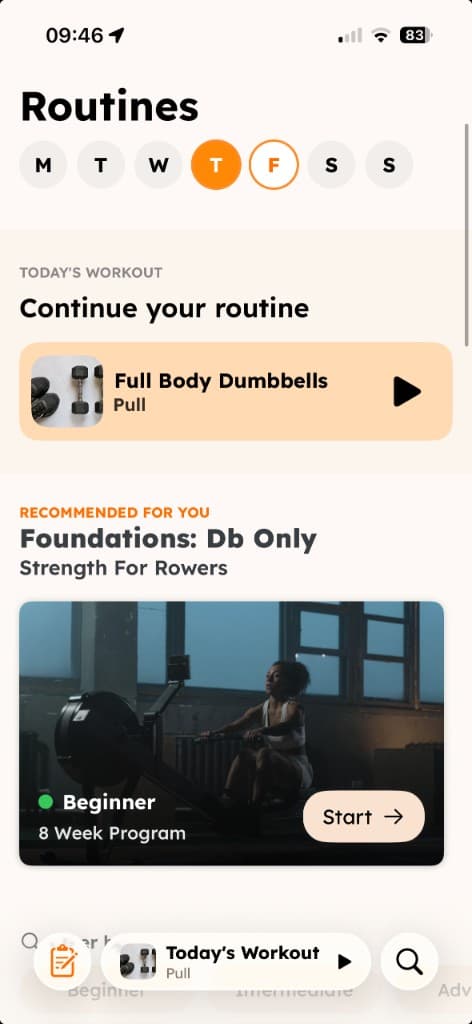
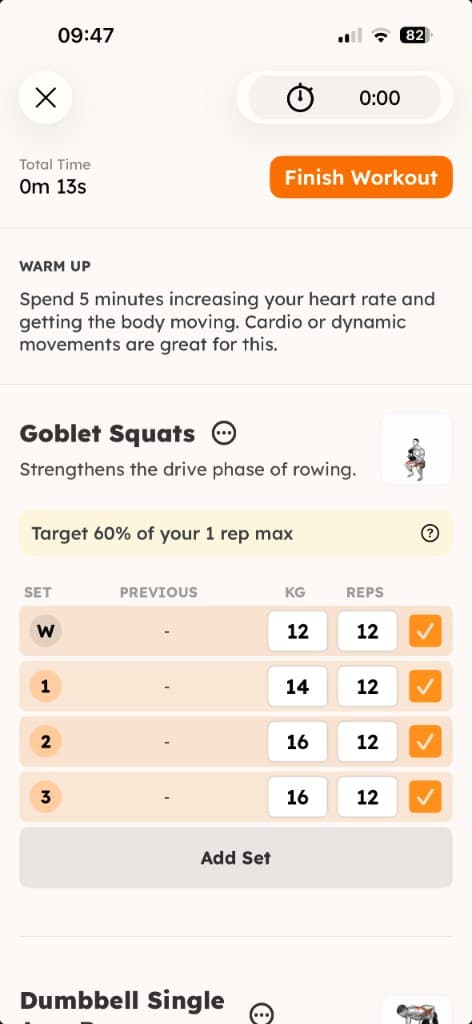
Strength Training Workouts is built for that: structured blocks (strength, hypertrophy, sport-specific plans), set-by-set logging, and progressive overload baked into the program — without the bloat of all-in-one trackers that want to quantify your grocery walk.
- See today's session upfront — exercises, sets, rep targets. No digging through menus before you touch a bar.
- Log weight and reps as you go — so next squat day you know exactly what to beat, not what you vaguely remember from Instagram stories.
- Follow multi-week blocks — deloads and load jumps are part of the plan, not something you reverse-engineer from a Notes app at midnight.
- Stay out of your own way — cycling lives on the bike computer; lifting lives here. Two tools, two jobs, zero guilt about not syncing your foam-rolling streak.
You handle the hard rides on the trainer. Let the app handle the boring part: remembering that you hit 140 kg for five last week, and that today is a plus-one-rep day, not a ego single.
The recovery rule (non-negotiable)
You can perfect the split and still stall if you under-eat and under-sleep. Two hard disciplines mean one recovery budget — not two separate ones.
Eat enough. Maintenance is not a personality trait; it is a moving target when you add rides. If strength drops and rides feel flat, increase calories — especially carbs around training — before you cut volume.
- Protein: roughly 1.6–2.2 g per kg bodyweight daily if you are training hard on both fronts. Consistent beats perfect.
- Carbs: front-load around squats, deadlifts, and hard rides. Low-carb hero weeks and heavy singles do not mix.
- Hydration: obvious, often ignored, always showing up as bad RPE on ride three of four.
Sleep like it is training. Seven to nine hours is not wellness fluff — it is when adaptation happens. Short sleep shows up first on heavy triples, then on the bike, then in your mood. Fix sleep before you add a third ride.
The rule in one line: if you would not skip a working set, do not skip food or sleep while running lifting and cycling together. The program only works if recovery keeps pace with stress.
Quick sanity checks
- Squat velocity or RPE creeping up? Pull one cycling knob — shorter ride, easier intensity, or an extra rest day.
- Rides improving but bar speed dying? Lift first on leg days, eat more, protect rest days.
- Everything flat? Deload the barbell block, keep rides easy for a week, sleep.
Powerlifting and cycling can live in the same week. They just cannot both pretend they are the only priority every day. Cluster the work, log the lifts, fuel the recovery — and keep showing up.