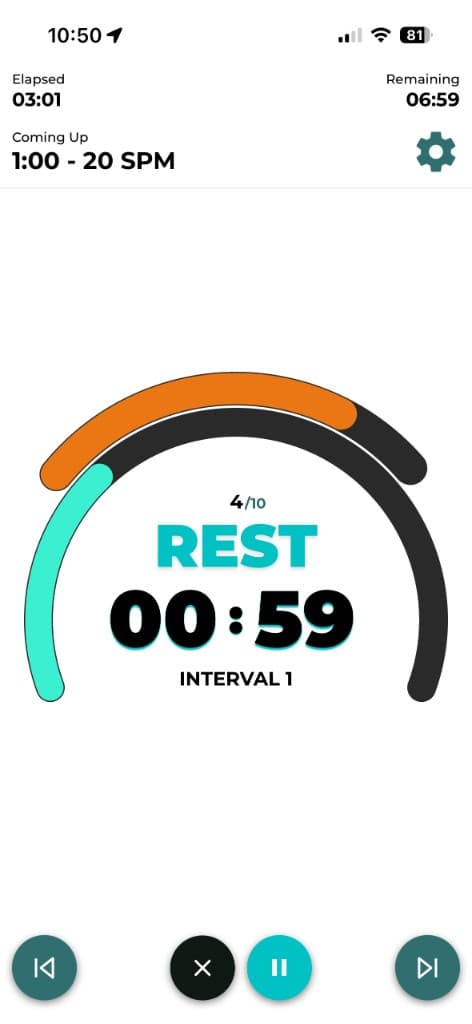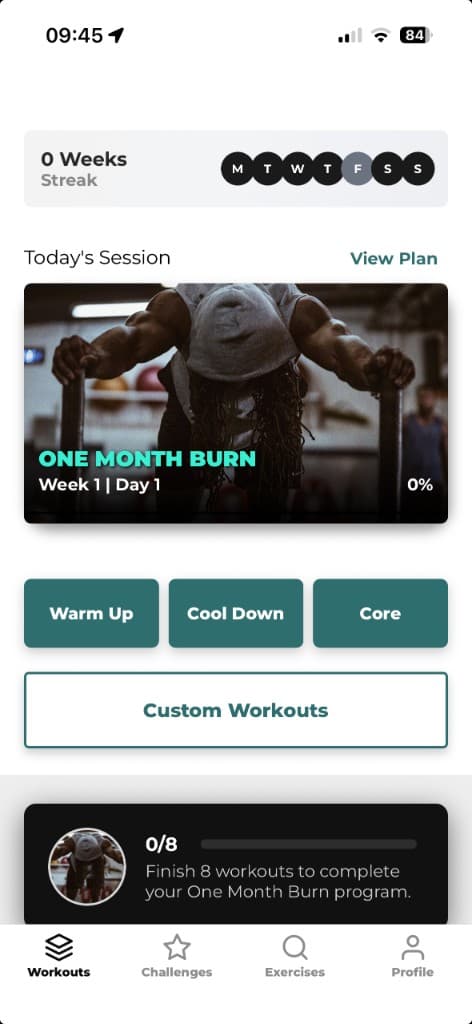

Random workouts can make you sweat, but they rarely make you stronger month after month. Strength adapts to measured stress. If you cannot remember the dumbbell you used on row three last Tuesday, you are guessing — and guessing stalls progress.
What to log (and why each number matters)
- Exercise: bench press and push-up are not the same stimulus. Name the movement so trends belong to the right pattern.
- Weight: barbell, dumbbell, machine stack, or added band tension — record the load you actually lifted.
- Reps: how many good repetitions you completed per set. Stop counting reps that break form.
- Sets: how many times you repeated that cluster of work. More sets mean more practice and more fatigue.
Optional but useful: rest times, how the last rep felt (easy, grinding, failed), and session notes when sleep or stress was off. Those explain odd days without derailing your long-term trend.
Training volume in plain language
Volume is the total amount of work you do. For weighted lifts, a simple slice is:
Volume = sets × reps × weight (per exercise, then added up for the workout or week).
Example: 3 sets of 10 reps at 40 kg on goblet squat → 3 × 10 × 40 = 1,200 kg of volume for that exercise.
Volume matters because it is the dose your muscles respond to. Too little and you maintain. A gradual rise with enough recovery and you adapt. A sudden spike — doubling everything because motivation hit — often shows up as soreness, poor sleep, or joint grumble long before new strength appears.
You do not need to obsess over spreadsheets. You do need a rough sense of whether this week was similar to, slightly more than, or intentionally lighter than last week.
Progressive overload: the actual growth lever
Progressive overload means increasing training stress over time so your body keeps adapting. Heavier is the obvious path, but it is not the only one:
- More weight on the same reps (e.g. 32 kg → 34 kg goblet squats for 8 reps).
- More reps at the same weight (8 reps → 10 reps before adding load).
- More sets when recovery allows (3 × 8 → 4 × 8).
- Better reps — slower eccentrics, fuller range, less momentum — which makes the same weight harder and more productive.
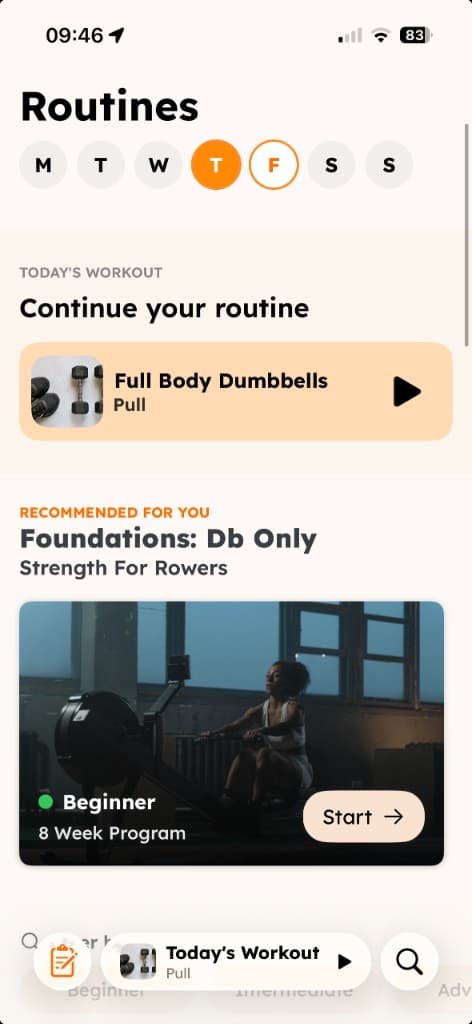
Programs in Strength Training Workouts bake this in: rep ranges, set counts, and percentage-based load targets that climb across weeks on gym plans likeBulletproof Soccer or Foundations for rowers. Home bodyweight blocks progress through harder variations and rep targets instead of plates.
Without a log, progressive overload becomes vibes. With a log, you see the exact knob to turn next session.
How the app tracks it during a workout
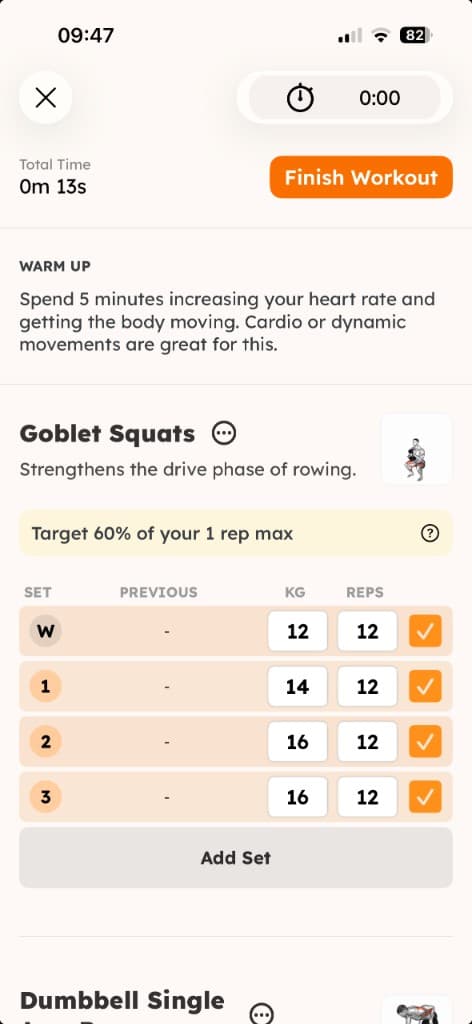
Strength Training Workouts is built around sessions you can follow set by set — not a blank notebook you fill after the fact.
- Pick a program or workout — routines show what is scheduled today and how the block fits the larger plan.
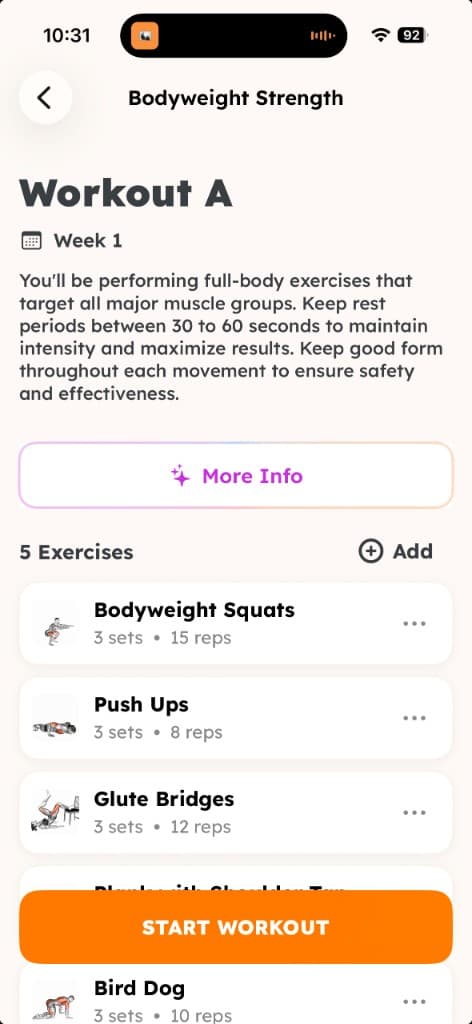
- Preview targets before you start — exercises, set counts, and rep goals are listed up front so you know the workload walking in.
- Log each set as you go — tap completed reps, adjust weight if you used a different dumbbell, and move through rest timers without losing the thread.
- Finish and review — the session saves what you actually did, so next time you have a baseline to beat.
Simple rules that keep progress honest
- Beat the log, not the leaderboard. Add the smallest jump that lets you complete target reps with solid form — often 1–2 kg on dumbbells or one extra rep.
- Hold form before load. A heavier rep that cuts range is not overload; it is a different, easier exercise.
- Use deload weeks when programs prescribe them. Volume down, technique up — then the next build phase has headroom.
- Track consistency. Four good sessions beat one heroic session and three skipped weeks.
Who benefits most from logging lifts
Beginners gain confidence fast when numbers prove they are improving. Intermediate lifters break plateaus when they stop repeating the same comfortable weight. Athletes on sport-specific plans — soccer resilience, rowing strength, general muscle gain — need proof that gym work is moving in the right direction without living in a spreadsheet.
If you only remember one idea: strength is a skill you measure. Weight, reps, sets, and the volume they create are how you keep score.