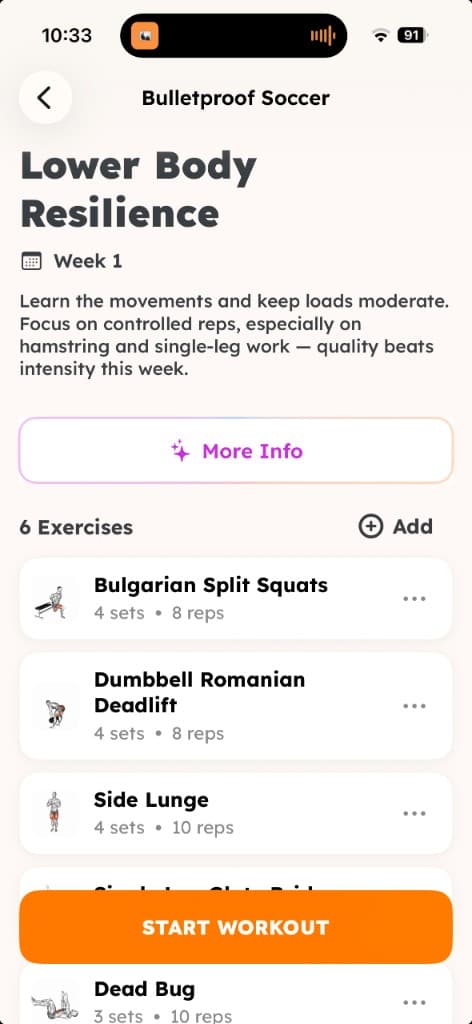

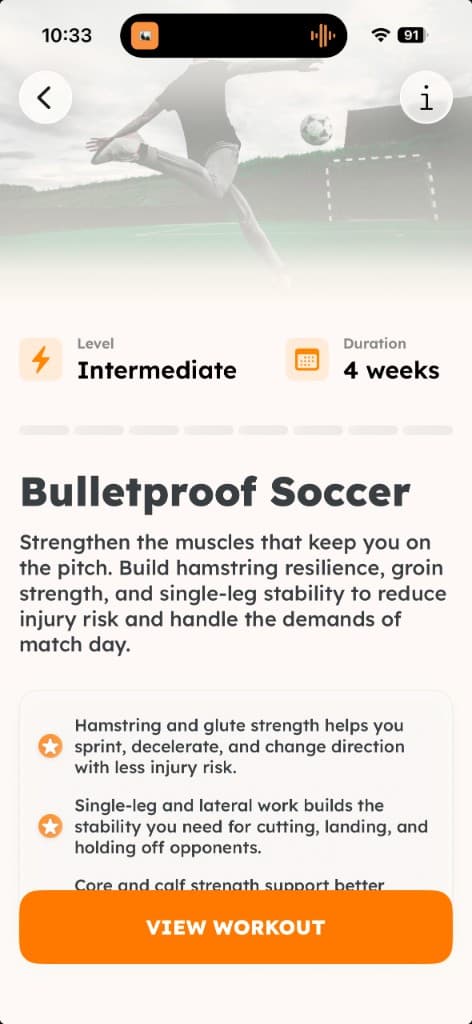
Match fitness is not the same as gym strength — but the right lifts reduce injury risk and make you more stable when you cut, land, and hold off opponents. This plan alternates lower-body resilience work with power and core stability, two sessions per week, with loads that climb from 60% toward 80% of your working max by week four.
What this program trains
- Hamstring and glute resilience: Romanian deadlifts, split squats, and (from week two) leg curls build the posterior chain for sprinting and deceleration.
- Lateral and single-leg stability: side lunges, step-ups, and glute bridges target cutting, landing, and balance on one leg.
- Explosive power: box jumps and kettlebell swings develop hip drive for acceleration and striking without heavy spinal loading.
- Core under chaos: dead bugs, plank shoulder taps, and bird dogs keep you stable through contact and quick direction changes.
How the four weeks are laid out
- Two gym sessions per week — Lower Body Resilience and Power + Stability, roughly 45–60 minutes each depending on rest.
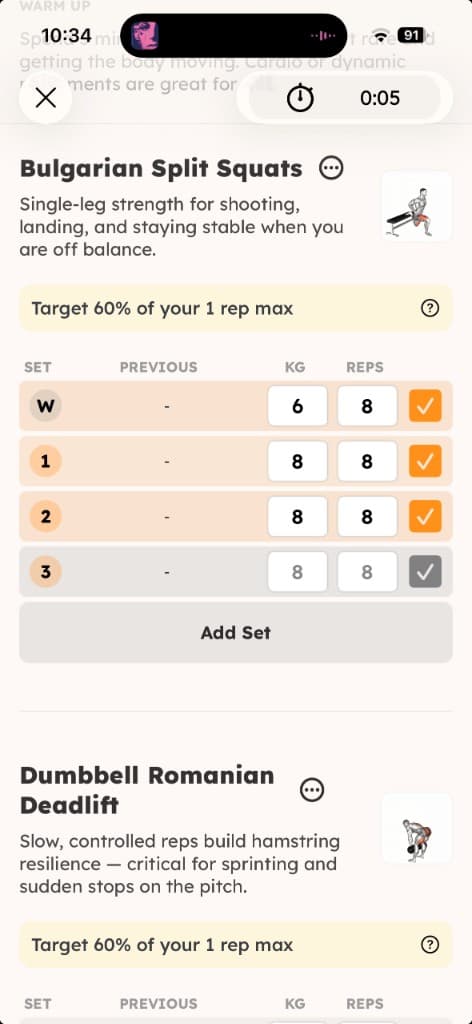
- Built-in warm-up sets on key lifts so you ramp load safely before working sets.
- Progressive intensity: week one emphasises technique at 60%; weeks three and four push main lifts toward 70% and 80%.
- Hamstring isolation from week two: lying leg curls join the lower-body day once movement patterns feel familiar.
Who is this plan for?
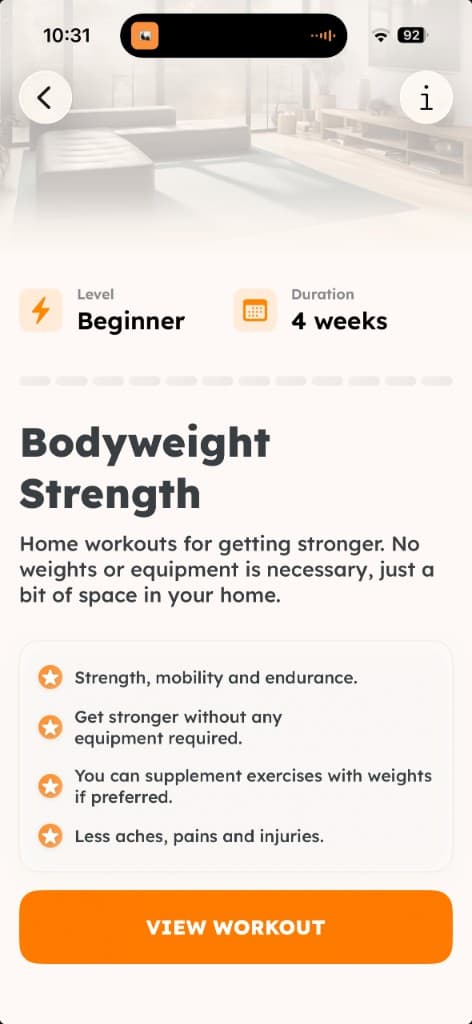
Intermediate players with gym access who want structured off-pitch work — five-a-side regulars, club players between seasons, or anyone coming back from a hamstring or groin scare. You should be comfortable with squats, hinges, and single-leg work before adding load.
Why follow it in the app instead of from memory
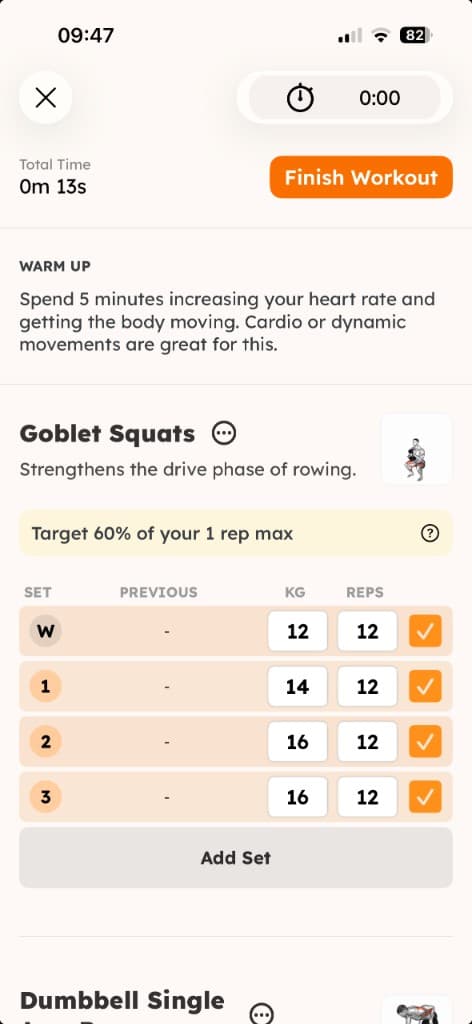
Strength sessions fall apart when you lose track of warm-up sets, working weight, or which exercise comes next. Strength Training Workouts shows the full workout before you start — exercise notes, set targets, and load guidance — then logs every set as you go. Compare week one to week four without digging through notes. (Here is why tracking weight, reps, and volume matters.)