
Rowing spreads effort across legs, hips, trunk, and arms — more muscle working usually means more energy burned per minute than single-mode cardio. A typical 30-minute moderate session lands around 250–350 calories for many adults, though body size and intensity shift that number up or down.
Why this plan works for fat loss
- Intervals lift total burn: alternating hard and easy periods keeps heart rate elevated and adds post-workout expenditure.
- You keep lean tissue: full-body strokes help maintain muscle while you are in a deficit — useful for long-term metabolism.
- Heart and lungs adapt: regular sessions improve conditioning so the same pace feels easier over time.
- Joints stay happier: seated rowing is low-impact compared with pavement running, which helps you stack sessions across the month.
What four weeks on this plan looks like
- Four rowing sessions weekly — most land between 20 and 35 minutes door to door.
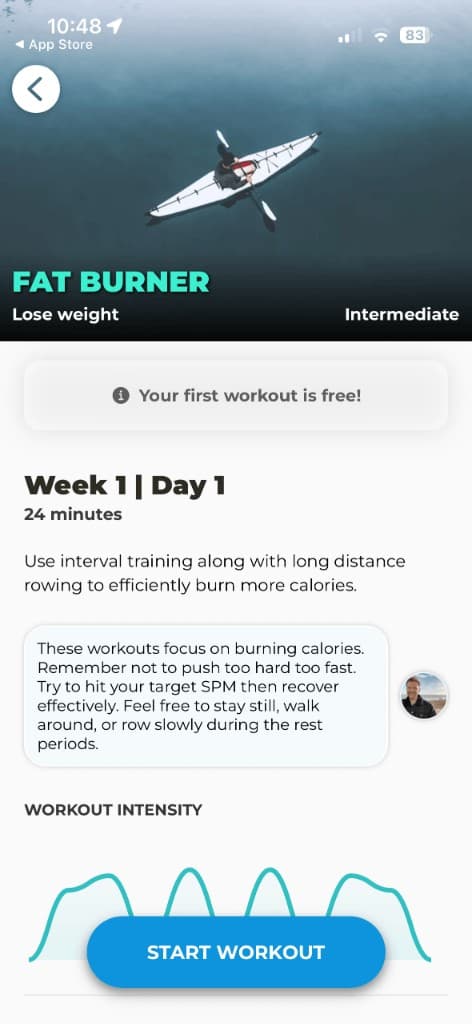
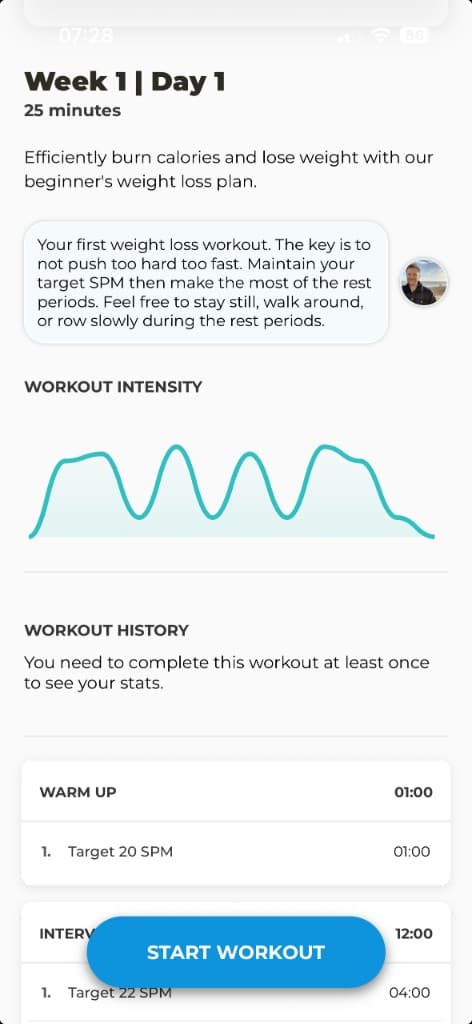
- Predictable structure: warm-up, main work, and cool-down every time so you know what you are walking into.
- Mixed modalities: HIIT pieces, medium blocks, and longer steady rows to avoid stale, easy sessions.
- Built-in off days: plan for at least three rest days each week — recovery is when adaptation actually happens.
Who is this plan for?
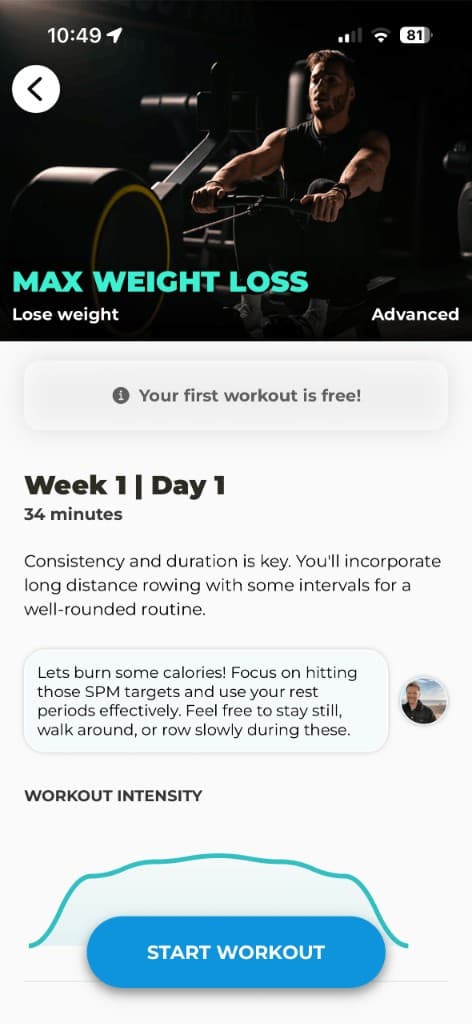
This routine suits beginner to intermediate rowers who want to efficiently burn calories on a rowing machine. No prior experience is required, but comfortable rowing technique makes a big difference. You can repeat the plan whenever you like, or combine it with a strength training program for all-round fitness.
Why follow it in the app instead of from memory
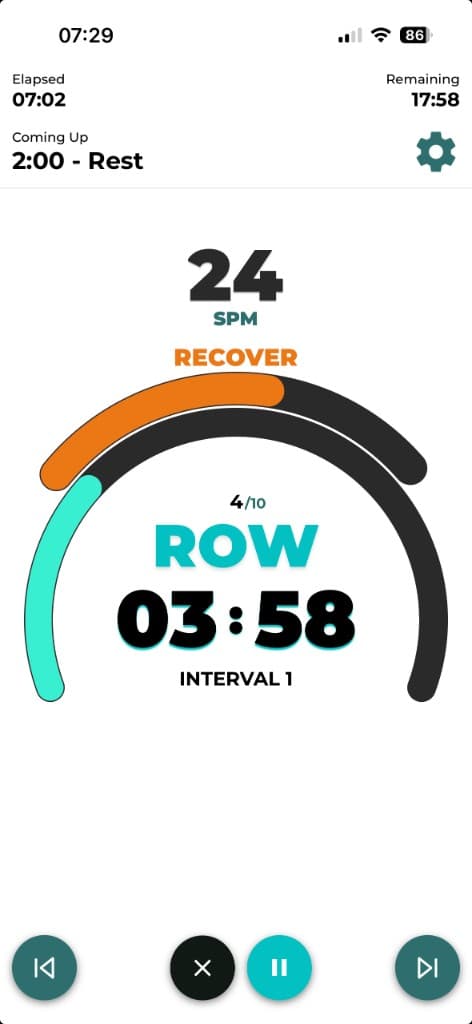
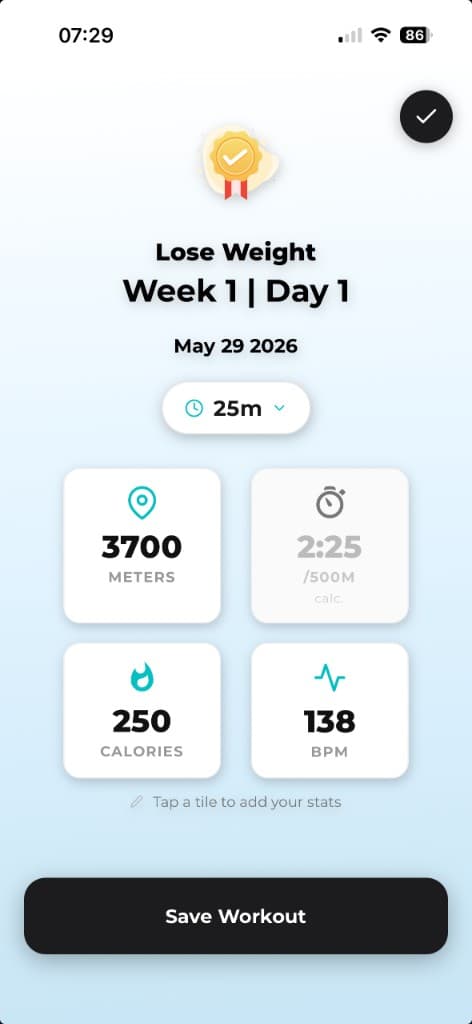
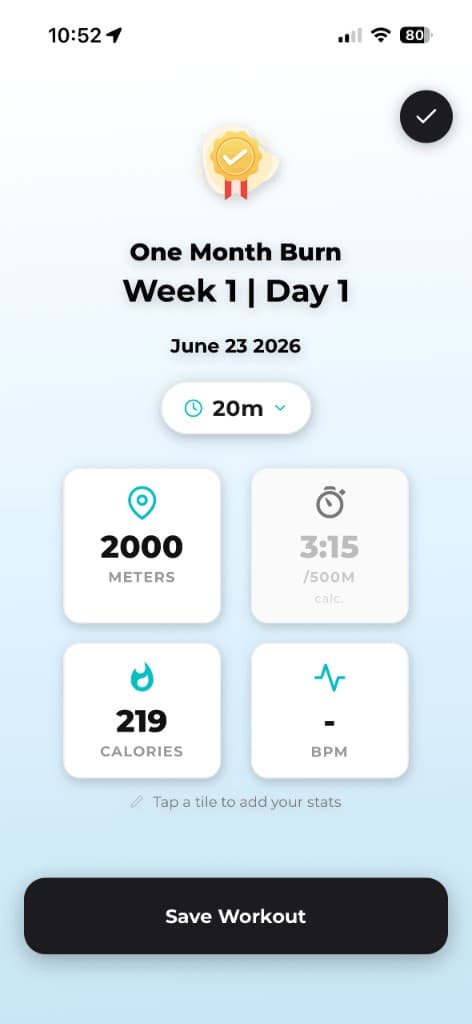
Interval sessions unravel the second you lose track of a rest timer. Rowing Machine Workouts maps the entire workout before you start, then calls each segment live — target rate, time remaining, row versus recover. Log distance, split, calories, or heart rate at the end and compare week one against week four without spreadsheets.